

Reason Code List / Mastercard / Reason Code 4853
DESCRIPTION
Why did I receive a chargeback with reason code 4853?
You received this chargeback because the cardholder claims you did not honor your promises.
These chargebacks might be the result of genuine merchant error — you made a mistake and didn’t fulfill the cardholder’s expectations. Or they might be the result of a cardholder misunderstanding.
There are several different types of cardholder dispute that could trigger a chargeback with this reason code. To better manage the various causes of chargebacks, Mastercard has created several reason code subcategories and nested them under this general, overarching reason code.
Check our other guides to learn more about specific authorisation-related issues that can cause this type of chargeback.
- 4853 – Addendum Dispute
- 4853 – Cardholder Dispute of a Recurring Transaction
- 4853 – Counterfeit Goods
- 4853 – Digital Goods Purchase of USD/EUR 25 or Less
- 4853 – Failed Travel Merchant – Europe Only
- 4853 – Goods/Services Not as Described/Defective
- 4853 – Goods or Services Not Provided
- 4853 – Issuer Dispute of a Recurring Transaction
- 4853 – No-Show Hotel Charge
- 4853 – Refund Not Processed
- 4853 – Refund Posted as a Purchase
- 4853 – Transaction Did Not Complete
- 4853 – Timeshares
- 4853 – Travel/Entertainment Services Cancelled
- 4853 – Travel/Entertainment Services Not Provided
Need help managing Mastercard 4853 chargebacks?
Let AltoShield help you create a comprehensive chargeback management strategy that can lower risk, reduce costs, boost approvals, and improve processing sustainability.
CLASSIFICATION
How does Mastercard classify this dispute?
Mastercard has two transaction processing workflows: dual message and single message.
Reason code 4853 is for the dual message system. The single message equivalent is reason code 53. While the codes are different, the rules and processes are generally the same for both dual message and single message.
ISSUER TIME LIMIT
How long can the issuer wait to file a chargeback with reason code 4853?
In most regions and situations, issuers must file cardholder dispute chargebacks within 120 days of the transaction processing date.
VALIDITY
What would make a Mastercard 4853 chargeback invalid?
An issuer can’t use reason code 4853 in the following situations.
- The transaction was a real-time push payment.
- The transaction was processed at an automated fuel dispenser (AFD).
- The transaction involved a business payment service provider (BPSP) for an invoice between a buyer and B2B supplier.
- The dispute is for the cash-back portion of the transaction.
- The merchant is refusing to refund shipping or handling charges for a case of buyer’s remorse.
- The cardholder is attempting to collect on a tort — a wrongful act, damages, or injuries.
There are other factors that can make a chargeback invalid.
- The chargeback does not meet Mastercard’s filing requirements.
- The chargeback was processed after the time limit.
- A single transaction had more than one chargeback.
- The primary account number (PAN) and acquirer reference number (ARN) used in the chargeback do not match what was sent in the original transaction record.
Before processing a chargeback, the issuer must check to see if the merchant has already refunded the transaction.
TRANSLATION
What language can the issuer use for a 4853 chargeback?
If the issuer and acquirer do not share a common language, all relevant non-English documents must be accompanied by an English version.
If the issuer and acquirer do share a common language, an English translation of the documents is not necessary for most regions (Brazil is an exception) during the chargeback and second presentment stage of the transaction lifecycle. However, an English translation will be needed if the issuer advances the case to pre-arbitration and the acquirer responds.
If a translation is required but not provided, Mastercard will likely rule against the non-compliant party.
SECOND PRESENTMENT
Can I fight a chargeback with reason code 4853?
Yes, you can respond to a chargeback with reason code 4853. The process is called second presentment or representment.
Each subcategory has its own response requirements.
Visit the page for your specific subcategory to learn more.
- Addendum Dispute
- Cardholder Dispute of a Recurring Transaction
- Counterfeit Goods
- Digital Goods Purchase of USD/EUR 25 or Less
- Failed Travel Merchant – Europe Only
- Goods/Services Not as Described/Defective
- Goods or Services Not Provided
- Issuer Dispute of a Recurring Transaction
- No-Show Hotel Charge
- Refund Not Processed
- Refund Posted as a Purchase
- Transaction Did Not Complete
- Timeshares
- Travel/Entertainment Services Cancelled
- Travel/Entertainment Services Not Provided
If you provide supporting documentation with your second presentment, do not include the cardholder’s full account number (PAN) or any images that contain sexual subject matter.
ACQUIRER TIME LIMIT
How quickly do I need to file a chargeback response?
Response timelines vary by subcategory and region. Generally — in most regions and for most subcategories — responses must be submitted to the issuer within 45 days of the chargeback processing date.
There are a few timeline exceptions. The following countries have alternate time limits in certain situations — either 10, 20, or 30 days instead of 45.
- Costa Rica
- Kazakhstan
- Mainland China
- Nigeria
- Poland
- Tanzania
NOTE: This time limit is for the acquirer — not you, the merchant. Merchant time limits are usually much shorter. Review your chargeback notice or check with your acquirer to find out how long you have to respond.
ADVANCING THE CASE
Are pre-arbitration and arbitration an option for reason code 4853?
Yes, pre-arbitration and arbitration are an option for Mastercard reason code 4853.
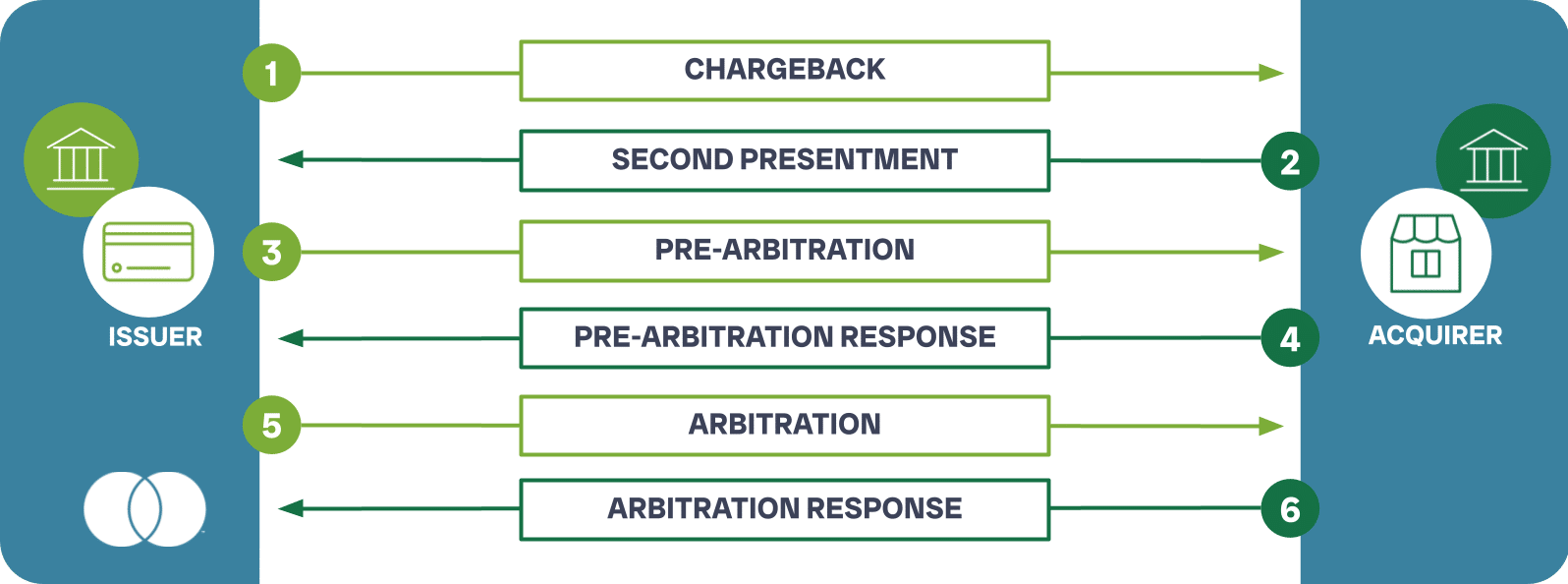
Here is an overview of the full Mastercard dispute lifecycle and which entity is responsible for each filing.
Check our Mastercard pre-arbitration and arbitration guide to learn more.
Changing the chargeback reason code
In certain situations, an issuer can change a chargeback’s reason code during the pre-arbitration process.
Change of Reason within the Cardholder Dispute Chargeback
An issuer can change the reason for a dispute from one subcategory to another. For example, the original chargeback claims the goods were not received. During the course of the dispute, the goods were delivered, but they arrived damaged.
In order to change the subcategory for the dispute, all of the following conditions must be met:
- The original chargeback was valid.
- A second presentment remedied the original chargeback, but the issuer identified a different subcategory is now applicable.
Change of Chargeback Reason to a Cardholder Dispute Chargeback
An issuer can change from a non-cardholder dispute to a cardholder dispute when appropriate and all of the following are true.
- The original transaction was valid.
- A second presentment remedied the original chargeback, but the issuer identified that a 4853 chargeback is applicable.
NOTE: An issuer cannot switch from a fraud reason code to a cardholder dispute reason code just to avoid liability. If the cardholder did participate in the transaction, this reason code is not applicable at any point in the dispute lifecycle.
PREVENT
How can I avoid chargebacks like this in the future?
Here are steps you can take to avoid Mastercard reason code 4853 in the future.
These suggestions are applicable to all merchants…
- Make sure all service and merchandise descriptions are complete, accurate, and not misleading.
- Only sell genuine merchandise.
- Abide by the delivery or service date you promised.
- Have merchandise ready for pickup at the time you specified it would be available.
- Don’t charge the card until the merchandise has been shipped.
- Notify the customer as soon as possible if merchandise is out of stock or the delivery will be delayed.
- Use the correct size boxes and sufficient packing material so items won’t break in transit.
- Make sure your fulfillment department is familiar with your merchandise, has a complete understanding of what has been purchased, and knows what to ship.
- Send a confirmation email or text as soon as the transaction has been processed.
- Follow up with a cardholder if purchased services aren’t being used.
- Provide exceptional customer service and promptly acknowledge customers when they make contact.
- Make sure your refund or cancellation policy is clear, complete, and shared before the transaction is processed. Any special conditions — like restocking fees, all sales are final, or in-store credit — must be disclosed. Publish your terms on the checkout page near the submit button. Require customers to select a “click to accept” box or acknowledge the policy in some other way before completing the purchase.
- Promptly fulfill all valid requests for replacements, refunds, or cancellations. If you issue a refund, act quickly so the credit will appear on the cardholder’s statement as soon as possible.
- If you will be crediting the cardholder for a reduced amount, communicate the difference before processing the credit.
These suggestions are applicable if you provide digital goods…
- Ensure that purchases are disabled by default. Cardholders should opt into purchases.
- Ask the cardholder if a password or other form of authentication should be required before making a purchase. If a password is not required, the cardholder must agree to these terms (for example, checking a box). If the cardholder chooses to provide authentication information before each purchase, ask the cardholder to re-enter the information after 15 minutes of inactivity.
- Clearly display the total transaction amount for each pending purchase and ask the cardholder to confirm or cancel.
- Immediately send an email or text message to confirm a purchase was made.
- When refunds are warranted, use best practices to accurately identify which transaction is being refunded and act promptly so the credit appears on the cardholder’s account.
These suggestions are applicable if you offer recurring transactions…
- Comply with Mastercard’s transaction processing regulations for negative option billing.
- Clearly and concisely communicate your terms and conditions for recurring transactions. Ask cardholders to review and agree to the terms before completing the transaction.
- Remind customers of upcoming charges, especially if a significant amount of time passes between each recurring billing cycle.
- Promptly fulfil qualified non-renewal requests.
- Send a notification after you’ve cancelled the recurring payment.
- If new fees are incurred after the cancellation, communicate with the cardholder about how those charges should be handled.
- If a chargeback is issued for a recurring transaction, make sure future transactions are cancelled.
These suggestions are applicable if you process addendum transactions…
- Clearly explain the situations that might cause you to charge the card a second time.
- Have the cardholder read and agree to terms of service before processing the initial transaction.
These suggestions are applicable if your business is a hotel or timeshare…
- Clearly explain your cancellation and no-show policy, and have the cardholder agree to the terms before finalising the reservation.
- Train your staff so guests won’t accidentally be charged a hotel no-show fee if the accommodations were used or you offered alternate accommodations.
- Accept cancellations for at least 14 days after the timeshare agreement date.
Want additional chargeback prevention tips? Check our detailed guide.
NOTE
Mastercard chargeback rules are complex. The guide is over 1,500 pages long — compared to 67 pages for Visa — and contains detailed rules for both issuers and acquirers.
In an attempt to simplify the complex, we are only sharing information that is most relevant to merchants. If you are an acquirer and in need of more details, reach out to our team. We’d be happy to walk through the specifics with you.
DESCRIPTION
Why did I receive a chargeback with reason code 4853?
You received this chargeback because the cardholder claims you did not honor your promises.
These chargebacks might be the result of genuine merchant error — you made a mistake and didn’t fulfill the cardholder’s expectations. Or they might be the result of a cardholder misunderstanding.
There are several different types of cardholder dispute that could trigger a chargeback with this reason code. To better manage the various causes of chargebacks, Mastercard has created several reason code subcategories and nested them under this general, overarching reason code.
Check our other guides to learn more about specific authorisation-related issues that can cause this type of chargeback.
- 4853 – Addendum Dispute
- 4853 – Cardholder Dispute of a Recurring Transaction
- 4853 – Counterfeit Goods
- 4853 – Digital Goods Purchase of USD/EUR 25 or Less
- 4853 – Failed Travel Merchant – Europe Only
- 4853 – Goods/Services Not as Described/Defective
- 4853 – Goods or Services Not Provided
- 4853 – Issuer Dispute of a Recurring Transaction
- 4853 – No-Show Hotel Charge
- 4853 – Refund Not Processed
- 4853 – Refund Posted as a Purchase
- 4853 – Transaction Did Not Complete
- 4853 – Timeshares
- 4853 – Travel/Entertainment Services Cancelled
- 4853 – Travel/Entertainment Services Not Provided
Need help managing Mastercard 4853 chargebacks?
Let AltoShield help you create a comprehensive chargeback management strategy that can lower risk, reduce costs, boost approvals, and improve processing sustainability.
CLASSIFICATION
How does Mastercard classify this dispute?
Mastercard has two transaction processing workflows: dual message and single message.
Reason code 4853 is for the dual message system. The single message equivalent is reason code 53. While the codes are different, the rules and processes are generally the same for both dual message and single message.
ISSUER TIME LIMIT
How long can the issuer wait to file a chargeback with reason code 4853?
In most regions and situations, issuers must file cardholder dispute chargebacks within 120 days of the transaction processing date.
VALIDITY
What would make a Mastercard 4853 chargeback invalid?
An issuer can’t use reason code 4853 in the following situations.
- The transaction was a real-time push payment.
- The transaction was processed at an automated fuel dispenser (AFD).
- The transaction involved a business payment service provider (BPSP) for an invoice between a buyer and B2B supplier.
- The dispute is for the cash-back portion of the transaction.
- The merchant is refusing to refund shipping or handling charges for a case of buyer’s remorse.
- The cardholder is attempting to collect on a tort — a wrongful act, damages, or injuries.
There are other factors that can make a chargeback invalid.
- The chargeback does not meet Mastercard’s filing requirements.
- The chargeback was processed after the time limit.
- A single transaction had more than one chargeback.
- The primary account number (PAN) and acquirer reference number (ARN) used in the chargeback do not match what was sent in the original transaction record.
Before processing a chargeback, the issuer must check to see if the merchant has already refunded the transaction.
TRANSLATION
What language can the issuer use for a 4853 chargeback?
If the issuer and acquirer do not share a common language, all relevant non-English documents must be accompanied by an English version.
If the issuer and acquirer do share a common language, an English translation of the documents is not necessary for most regions (Brazil is an exception) during the chargeback and second presentment stage of the transaction lifecycle. However, an English translation will be needed if the issuer advances the case to pre-arbitration and the acquirer responds.
If a translation is required but not provided, Mastercard will likely rule against the non-compliant party.
SECOND PRESENTMENT
Can I fight a chargeback with reason code 4853?
Yes, you can respond to a chargeback with reason code 4853. The process is called second presentment or representment.
Each subcategory has its own response requirements.
Visit the page for your specific subcategory to learn more.
- Addendum Dispute
- Cardholder Dispute of a Recurring Transaction
- Counterfeit Goods
- Digital Goods Purchase of USD/EUR 25 or Less
- Failed Travel Merchant – Europe Only
- Goods/Services Not as Described/Defective
- Goods or Services Not Provided
- Issuer Dispute of a Recurring Transaction
- No-Show Hotel Charge
- Refund Not Processed
- Refund Posted as a Purchase
- Transaction Did Not Complete
- Timeshares
- Travel/Entertainment Services Cancelled
- Travel/Entertainment Services Not Provided
If you provide supporting documentation with your second presentment, do not include the cardholder’s full account number (PAN) or any images that contain sexual subject matter.
ACQUIRER TIME LIMIT
How quickly do I need to file a chargeback response?
Response timelines vary by subcategory and region. Generally — in most regions and for most subcategories — responses must be submitted to the issuer within 45 days of the chargeback processing date.
There are a few timeline exceptions. The following countries have alternate time limits in certain situations — either 10, 20, or 30 days instead of 45.
- Costa Rica
- Kazakhstan
- Mainland China
- Nigeria
- Poland
- Tanzania
NOTE: This time limit is for the acquirer — not you, the merchant. Merchant time limits are usually much shorter. Review your chargeback notice or check with your acquirer to find out how long you have to respond.
ADVANCING THE CASE
Are pre-arbitration and arbitration an option for reason code 4853?
Yes, pre-arbitration and arbitration are an option for Mastercard reason code 4853.
Here is an overview of the full Mastercard dispute lifecycle and which entity is responsible for each filing.
Check our Mastercard pre-arbitration and arbitration guide to learn more.
Changing the chargeback reason code
In certain situations, an issuer can change a chargeback’s reason code during the pre-arbitration process.
Change of Reason within the Cardholder Dispute Chargeback
An issuer can change the reason for a dispute from one subcategory to another. For example, the original chargeback claims the goods were not received. During the course of the dispute, the goods were delivered, but they arrived damaged.
In order to change the subcategory for the dispute, all of the following conditions must be met:
- The original chargeback was valid.
- A second presentment remedied the original chargeback, but the issuer identified a different subcategory is now applicable.
Change of Chargeback Reason to a Cardholder Dispute Chargeback
An issuer can change from a non-cardholder dispute to a cardholder dispute when appropriate and all of the following are true.
- The original transaction was valid.
- A second presentment remedied the original chargeback, but the issuer identified that a 4853 chargeback is applicable.
NOTE: An issuer cannot switch from a fraud reason code to a cardholder dispute reason code just to avoid liability. If the cardholder did participate in the transaction, this reason code is not applicable at any point in the dispute lifecycle.
PREVENT
How can I avoid chargebacks like this in the future?
Here are steps you can take to avoid Mastercard reason code 4853 in the future.
These suggestions are applicable to all merchants…
- Make sure all service and merchandise descriptions are complete, accurate, and not misleading.
- Only sell genuine merchandise.
- Abide by the delivery or service date you promised.
- Have merchandise ready for pickup at the time you specified it would be available.
- Don’t charge the card until the merchandise has been shipped.
- Notify the customer as soon as possible if merchandise is out of stock or the delivery will be delayed.
- Use the correct size boxes and sufficient packing material so items won’t break in transit.
- Make sure your fulfillment department is familiar with your merchandise, has a complete understanding of what has been purchased, and knows what to ship.
- Send a confirmation email or text as soon as the transaction has been processed.
- Follow up with a cardholder if purchased services aren’t being used.
- Provide exceptional customer service and promptly acknowledge customers when they make contact.
- Make sure your refund or cancellation policy is clear, complete, and shared before the transaction is processed. Any special conditions — like restocking fees, all sales are final, or in-store credit — must be disclosed. Publish your terms on the checkout page near the submit button. Require customers to select a “click to accept” box or acknowledge the policy in some other way before completing the purchase.
- Promptly fulfill all valid requests for replacements, refunds, or cancellations. If you issue a refund, act quickly so the credit will appear on the cardholder’s statement as soon as possible.
- If you will be crediting the cardholder for a reduced amount, communicate the difference before processing the credit.
These suggestions are applicable if you provide digital goods…
- Ensure that purchases are disabled by default. Cardholders should opt into purchases.
- Ask the cardholder if a password or other form of authentication should be required before making a purchase. If a password is not required, the cardholder must agree to these terms (for example, checking a box). If the cardholder chooses to provide authentication information before each purchase, ask the cardholder to re-enter the information after 15 minutes of inactivity.
- Clearly display the total transaction amount for each pending purchase and ask the cardholder to confirm or cancel.
- Immediately send an email or text message to confirm a purchase was made.
- When refunds are warranted, use best practices to accurately identify which transaction is being refunded and act promptly so the credit appears on the cardholder’s account.
These suggestions are applicable if you offer recurring transactions…
- Comply with Mastercard’s transaction processing regulations for negative option billing.
- Clearly and concisely communicate your terms and conditions for recurring transactions.
- Ask cardholders to review and agree to the terms before completing the transaction.
- Remind customers of upcoming charges, especially if a significant amount of time passes between each recurring billing cycle.
- Promptly fulfil qualified non-renewal requests.
- Send a notification after you’ve cancelled the recurring payment.
- If new fees are incurred after the cancellation, communicate with the cardholder about how those charges should be handled.
- If a chargeback is issued for a recurring transaction, make sure future transactions are cancelled.
These suggestions are applicable if you process addendum transactions…
- Clearly explain the situations that might cause you to charge the card a second time.
- Have the cardholder read and agree to terms of service before processing the initial transaction.
These suggestions are applicable if your business is a hotel or timeshare…
- Clearly explain your cancellation and no-show policy, and have the cardholder agree to the terms before finalising the reservation.
- Train your staff so guests won’t accidentally be charged a hotel no-show fee if the accommodations were used or you offered alternate accommodations.
- Accept cancellations for at least 14 days after the timeshare agreement date.
Want additional chargeback prevention tips? Check our detailed guide.
NOTE
Mastercard chargeback rules are complex. The guide is over 1,500 pages long — compared to 67 pages for Visa — and contains detailed rules for both issuers and acquirers.
In an attempt to simplify the complex, we are only sharing information that is most relevant to merchants. If you are an acquirer and in need of more details, reach out to our team. We’d be happy to walk through the specifics with you.
PUBLISHED ON: September 24, 2026

WRITTEN BY: Jessica Velasco