



Interchange plus plus (interchange ++ or IC++) is a pricing model that acquirers may use to manage a merchant’s debit and credit card processing fees.
Because this pricing model can be difficult to understand, we’ve created a guide that breaks down what IC++ is, how it compares to other pricing models, and whether it’s the right fit for your business.
What is interchange++ pricing?
The IC++ pricing model charges three distinct fees for every transaction a merchant processes: the interchange fee plus the scheme fee (sometimes referred to as the network fee) plus the acquirer fee. Thus the use of interchange and two pluses in the name!
The interchange fee + The card scheme fee + an acquirer fee
This model is primarily used in Europe and the UK because of government mandates about transparency. A similar but slightly different pricing model — interchange plus — is frequently used in North America.
Check our guide on processing fees to learn more about the difference between interchange++ and interchange+
What is interchange?
Before diving into interchange++, let’s go over what interchange means.
Interchange is a fee collected by the cardholder’s issuing bank every time a transaction is processed. This fee is meant to compensate the issuer for any costs and risks associated with processing the transaction.
Though the fee is paid to the issuing bank, the rates are set by the card schemes (Mastercard, Visa, etc.). Rates vary by factors such as your business type and merchant category code, card type (debit, credit, etc.), region, and processing strategy.
To learn more about interchange fees, check out our interchange guide.
How interchange++ pricing works
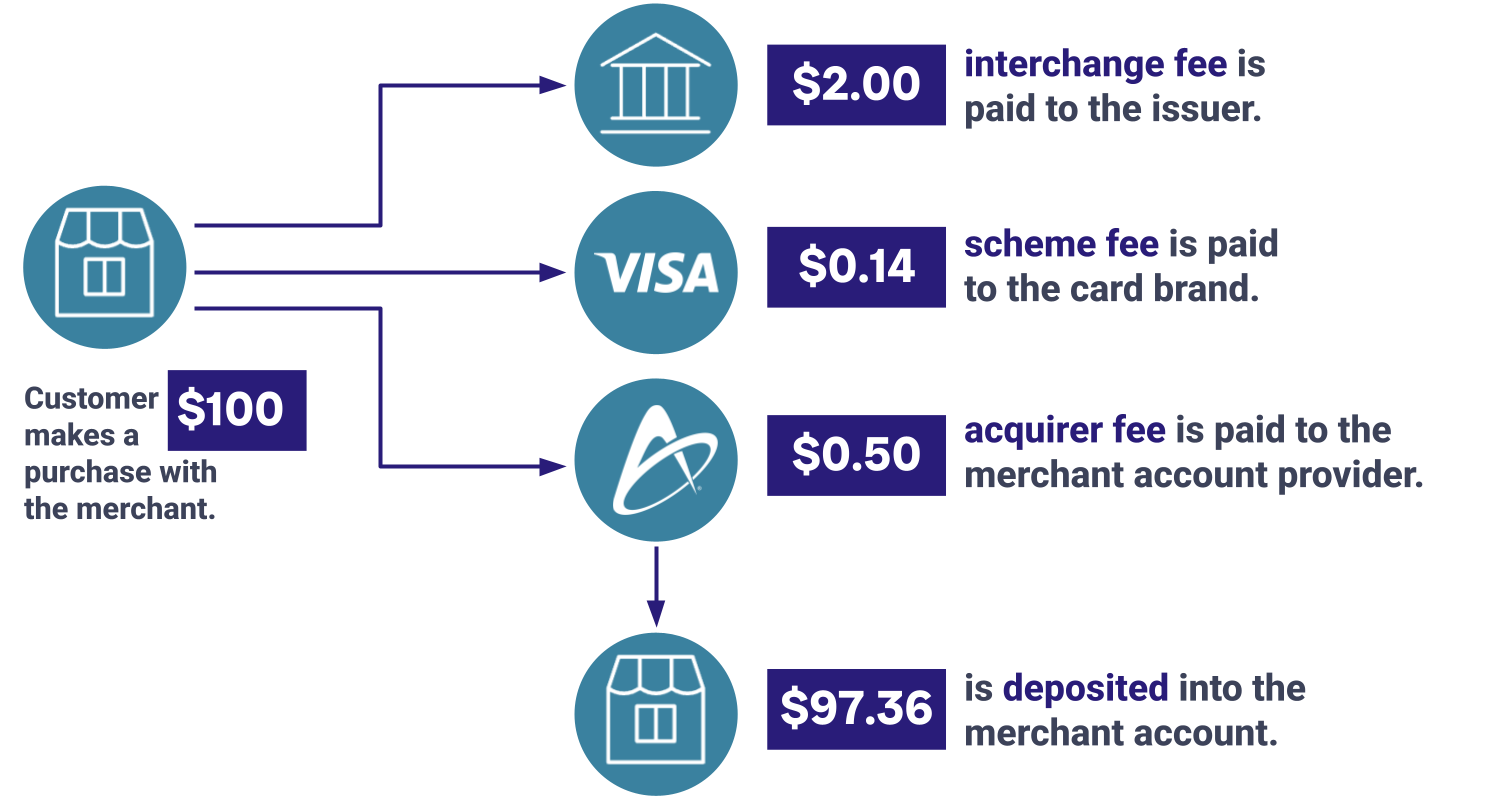
Every time a transaction is processed, there are three cost components that go to different entities. As a merchant, you have to pay these fees to accept debit card or credit card transactions.
The interchange fee is paid to the cardholder’s issuing bank.
The card scheme fee is paid to the corresponding card brand (Visa, Mastercard, etc.)
The acquirer fee is paid to the entity that supplies your merchant account.
The interchange fee is paid to the cardholder’s issuing bank.
The card scheme fee is paid to the corresponding card brand (Visa, Mastercard, etc.)
The acquirer fee is paid to the entity that supplies your merchant account.
To illustrate how these fees work, let’s look at a hypothetical example.
A customer makes a $100 purchase from you with a Visa credit card issued by Wells Fargo. The interchange rate is 2% and the scheme rate is 0.14%. Your acquirer charges 0.5%.
In this scenario, you would pay $2 to Wells Fargo, $0.14 to Visa, and $0.50 to your acquirer.
IC++ pricing compared to other pricing models
Let’s take a look at how the other pricing models compare to IC++.
Interchange++ vs. interchange+
Out of the four pricing models acquirers may use to manage card processing fees, the two interchange-based models (IC++ and IC+) offer the most transparency for fees.
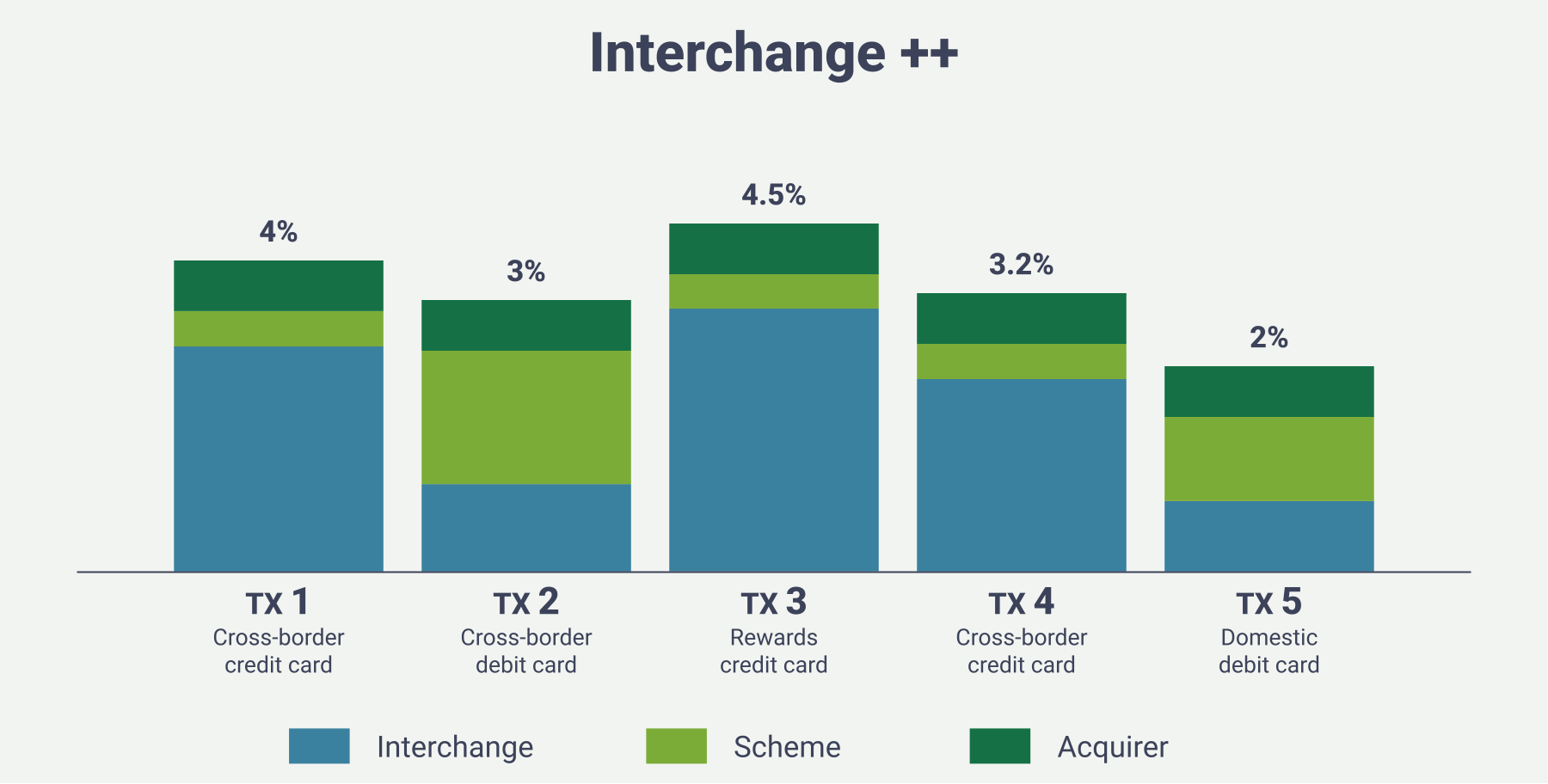
With IC++ pricing, every fee is broken out individually so you know exactly how much you are paying for each. Like this:
Interchange+ combines interchange and scheme fees into one total cost. It looks like this:
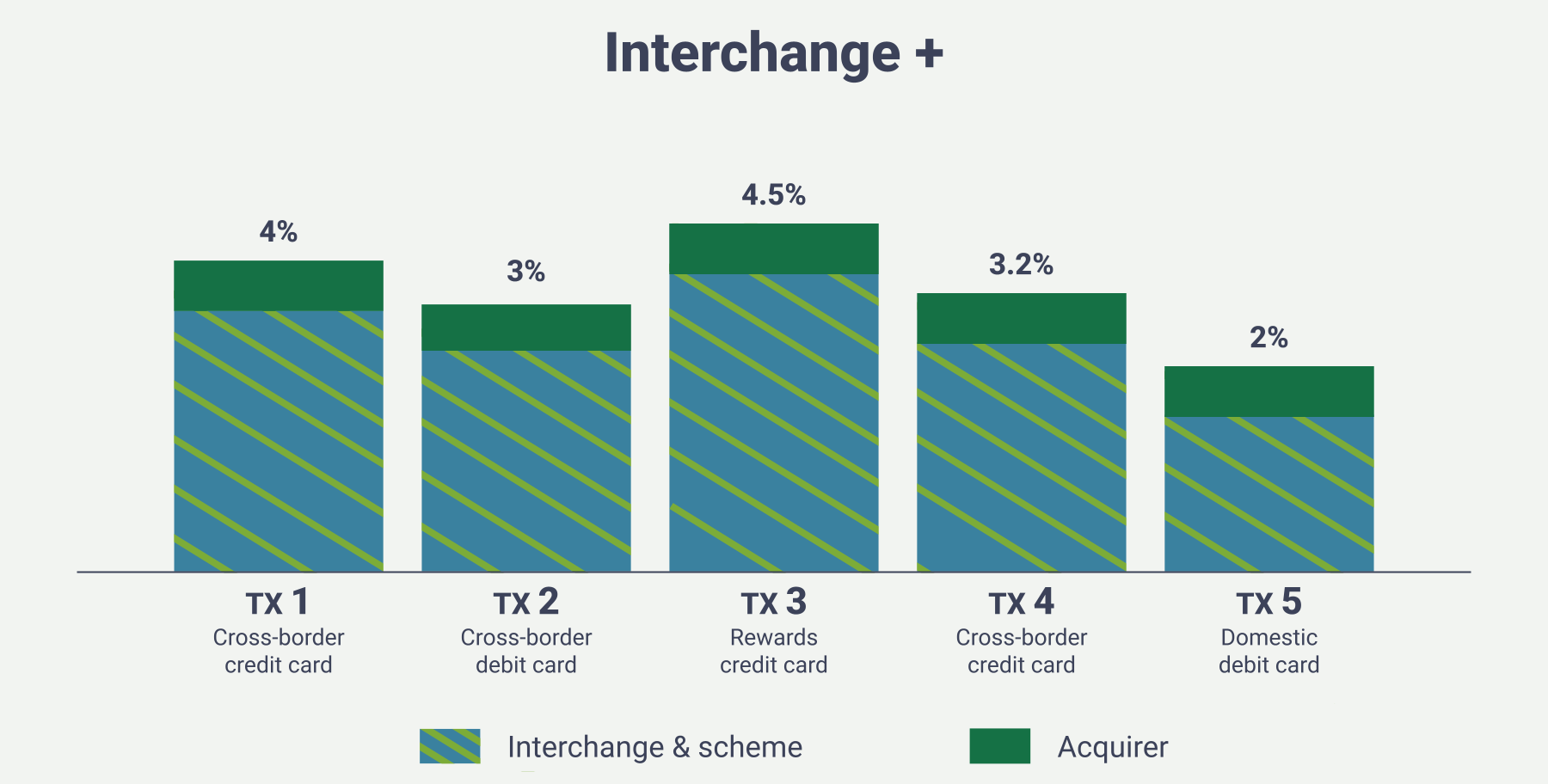
With both fee structures, you pay the same amount to your acquirer for every transaction but your interchange and network fees can fluctuate.
Because acquirers in Europe have to break down the interchange fee and scheme fee separately, IC++ is the primary model used. Interchange+ is typically used in North America where there aren’t as many data transparency requirements.
Note
Interchange++ is the most transparent pricing model, but that doesn’t mean North American merchants are missing out. The most important distinction to make when analysing fees is fixed vs. variable costs. And that is still possible with interchange+.
Interchange++ vs. tiered pricing
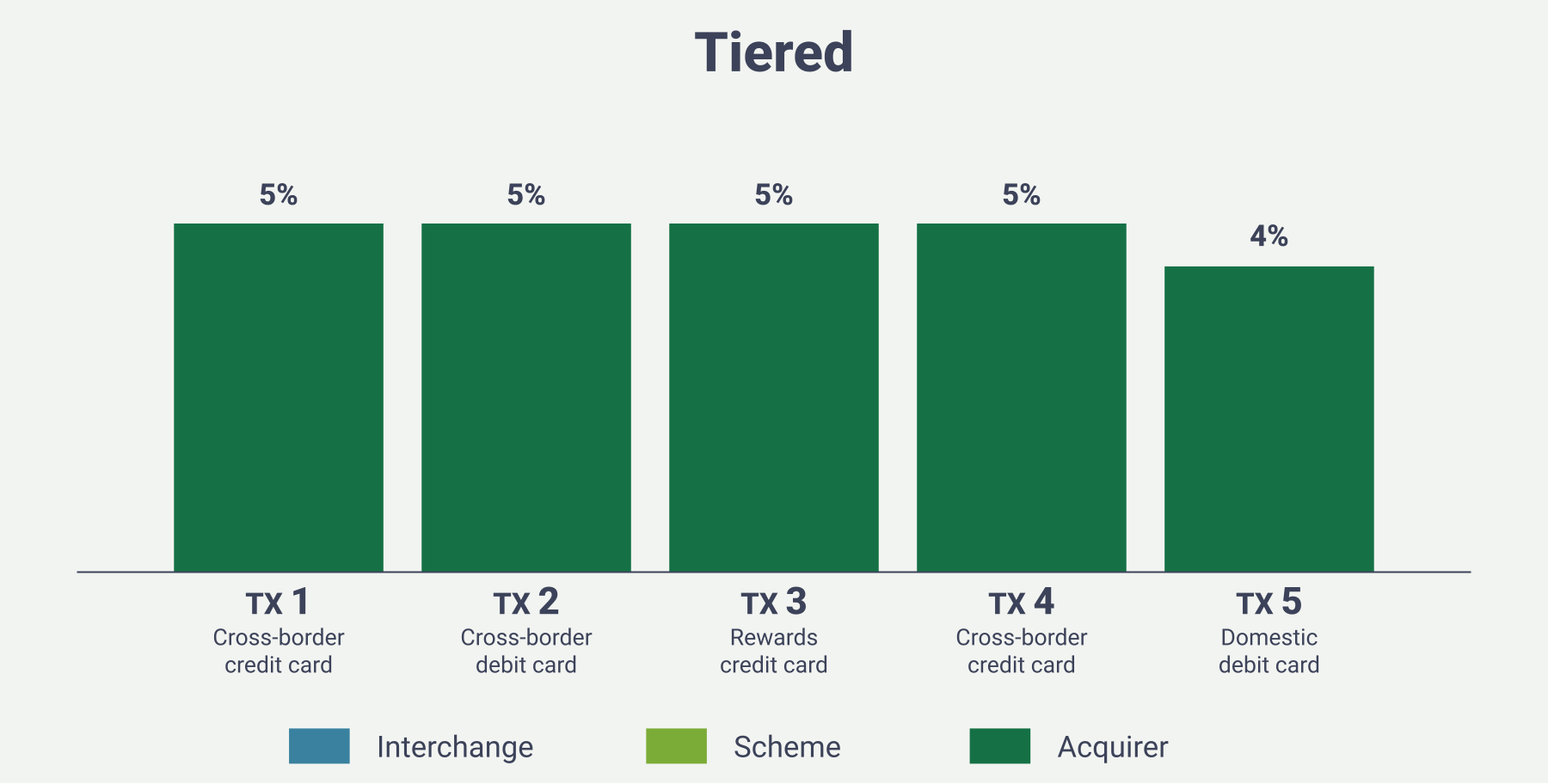
The tiered pricing model groups transactions into three different tiers based on risk level. Each tier — usually called qualified, mid-qualified, and non-qualified — has its own rate. The lower the risk, the lower the fee.
With IC++ pricing, you can easily see how much you are paying to each entity involved— the issuer, the card scheme, and the acquirer. With tiered pricing, you have no way of knowing how much you are paying for each fee.
Tiered pricing looks like this:
Interchange++ vs. flat-rate pricing
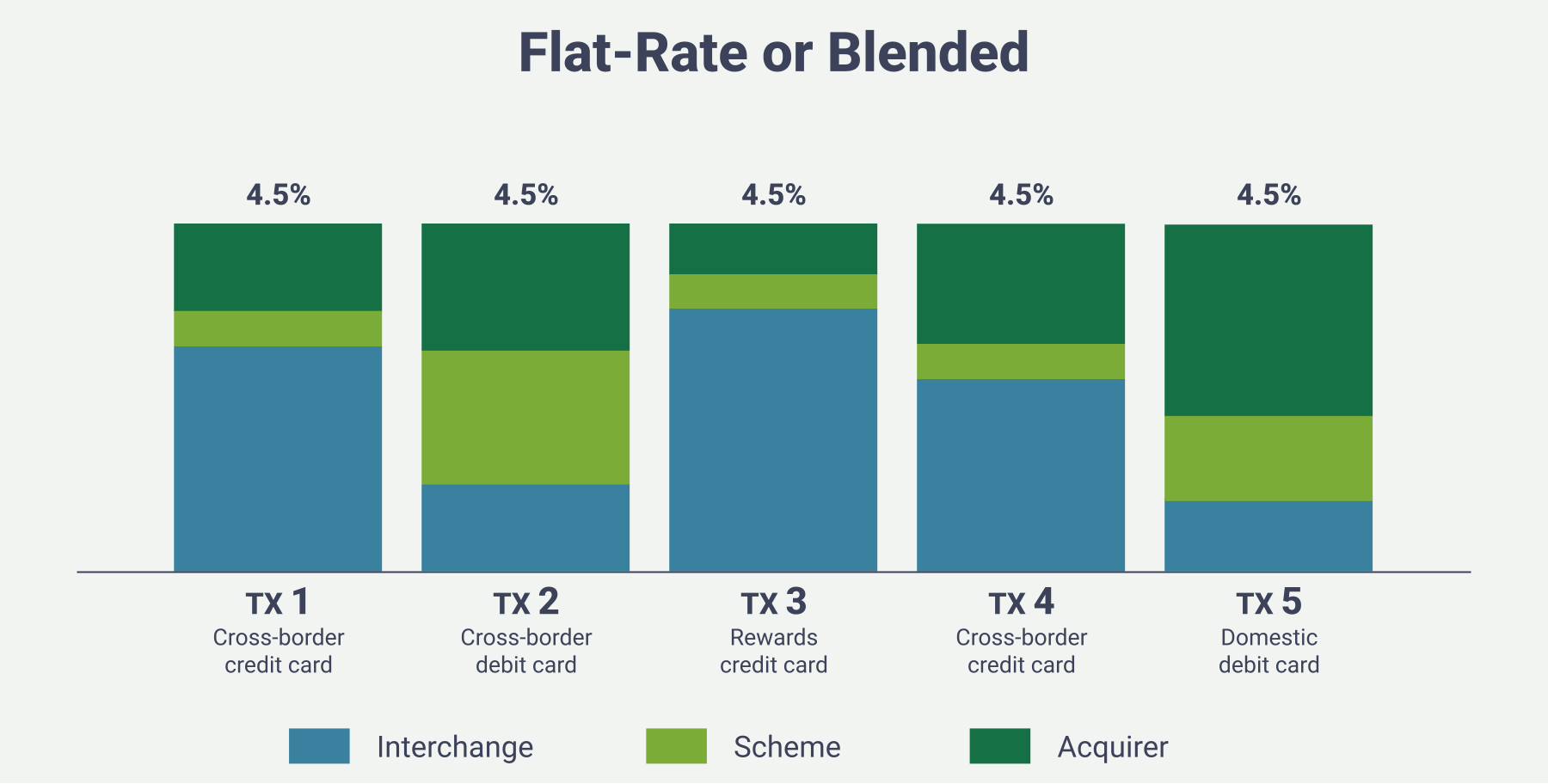
Flat-rate pricing is just like it sounds. Every transaction comes with a set fee. Fluctuating rates — interchange fees and scheme fees — won’t alter what you pay.
Compared to interchange++, flat-rate pricing is usually more expensive. However, in exchange for the higher fees, you receive greater simplicity.
Here’s what flat-rate pricing looks like.
Pros and cons of interchange++
Let’s say you’re considering working with a merchant account provider that offers interchange plus plus pricing. Would it be a good fit for your business?
Let’s break down the benefits and the potential negatives of this pricing model.
Benefits of interchange++ pricing
For most merchants, the pros of IC++ far outweigh the cons. Here are the top 3 benefits of using this pricing model.
IC++ is the most transparent pricing model. You can see exactly what you pay to process each transaction.
Interchange and scheme fees can fluctuate. Because IC++ charges you exactly what the rates are — and not estimates like tiered and flat-rate — you’ll typically have lower fees.
As your business grows and processing volume increases, you can negotiate costs with your provider. Increasing sales may even qualify you for bulk processing discounts.
Cons of interchange++ pricing
While there are several benefits of IC++, there are also a couple of drawbacks.
IC++ can make it difficult to predict profits or estimate processing costs because of the variability of interchange costs. For example, a product sold in two different regions or bought with two different card types can incur two different fees.
If you’re newer to payment processing, the IC++ fee structure can be confusing. You may need to spend extra time reviewing statements to understand what you’re being charged. However, over time, this gets easier!
How to get interchange plus plus credit card processing
Want to learn more about interchange++? Get in touch with our team. We’ll take a look at your current payment strategy and help determine if you could benefit from IC++.
Frequently asked questions about IC++ pricing
What are typical credit card processing fees?
Average blended processing fees for online businesses accepting debit, credit, and prepaid cards from major card brands are usually in a range of 2-6% per transaction.
What is the interchange rate for debit and credit card transactions?
Interchange rates vary depending on dozens of factors including the card brand (Visa, Mastercard, etc.), the card type (rewards, consumer credit, business credit, etc.), merchant category (high risk vs. low risk), transaction method (card-not-present vs. card present), and more.
They are typically a percent of the transaction amount, and averages range between 0.05% and 2.60%. Debit cards have lower rates than credit cards. And certain regions have set caps on interchange rates.
If you want to know exact pricing, check the card brand interchange tables.
How do you calculate interchange fees?
To calculate interchange fees, you need to multiply the transaction amount by the interchange rate plus any flat fees. For example, if a transaction is $100 and the interchange rate is 1.5% + 0.10, the fee would be $1.60.
Who pays interchange fees?
You, the merchant, pay for interchange fees. This covers the cost of things like conducting cardholder background checks, promoting card usage, and customer support to the cardholder.
You basically pay for the privilege of being able to accept card payments.
Do interchange fees change and does that affect IC++ pricing?
Yes, interchange fees are adjusted 1-2 times a year by the card schemes (Mastercard, Visa, etc.). IC++ rates change automatically as the new fees pass through to merchants.
AUTHOR
Jessica Velasco
For more than a decade, Jessica Velasco has been a thought leader in the payments industry. She aims to provide readers with valuable, easy-to-understand resources.