



A chargeback reduction plan can help you reduce risk quickly and effectively. Here’s how to simplify the plan’s creation and implementation.
What is a chargeback reduction plan?
A chargeback reduction plan, sometimes referred to as a dispute remediation plan, is a formal document that outlines how you will reduce your business’s risk of chargebacks (and the fraud that can cause them).
Why was I asked to create a chargeback reduction plan?
A chargeback reduction plan is often requested by a card brand (Mastercard, Visa, etc.) or an acquirer when merchant risk starts to escalate.
If you are identified by a card brand’s monitoring program — such as VAMP or GMAP — you will almost certainly be required to create and submit a plan for review.
Card brands use these monitoring programs as a sort of probation when your fraud and/or chargeback rates become excessive. If risk continues to increase, payment processing privileges could be revoked.
But before closing your account, your acquirer may give you a chance to try to get your chargebacks under control. And that’s where the chargeback reduction plan comes in.
If you identify the issues that are causing disputes and put a plan in place to resolve those issues, you might not be viewed as a threat. And you might be able to keep your merchant account.
How do I create a chargeback reduction plan?
Don’t just think of your chargeback reduction plan as administrative busywork.
Use this opportunity to really examine the current state of your business, recognize the direction you want the business to go in, and determine the best way to meet your objectives. Be realistic about what has happened and what could happen.
When you are ready to put pen to paper, your chargeback reduction plan should consist of six sections.
SECTION #1
Share general business information.
Start by sharing general information about your business. Your acquirer might use this information to identify potential triggers and provide tips that have worked for other businesses with your same characteristics.
Answer these questions:
- What type of products or services do you sell?
- How do you market your products or services? (Google ads, Instagram ads, email campaigns, etc.)
- Where do you sell your products or services? (website, app, in-person, over the phone, etc.)
- What billing model do you use? (one-time purchase, trial offer, subscriptions, etc.)
- Do you use a single DBA (doing business as) name for all interactions? (website, invoices, authorization requests, billing descriptors, etc.)
SECTION #2
Explain the reason for excessive chargebacks.
Provide a thorough explanation of what caused your business to receive an excessive amount of chargebacks. What is the root cause of the issue?
For example, did you discover one of your marketing sources was engaging low-quality customers? Was there an error in the fulfillment department? Is your return policy hard to abide by?
SECTION #3
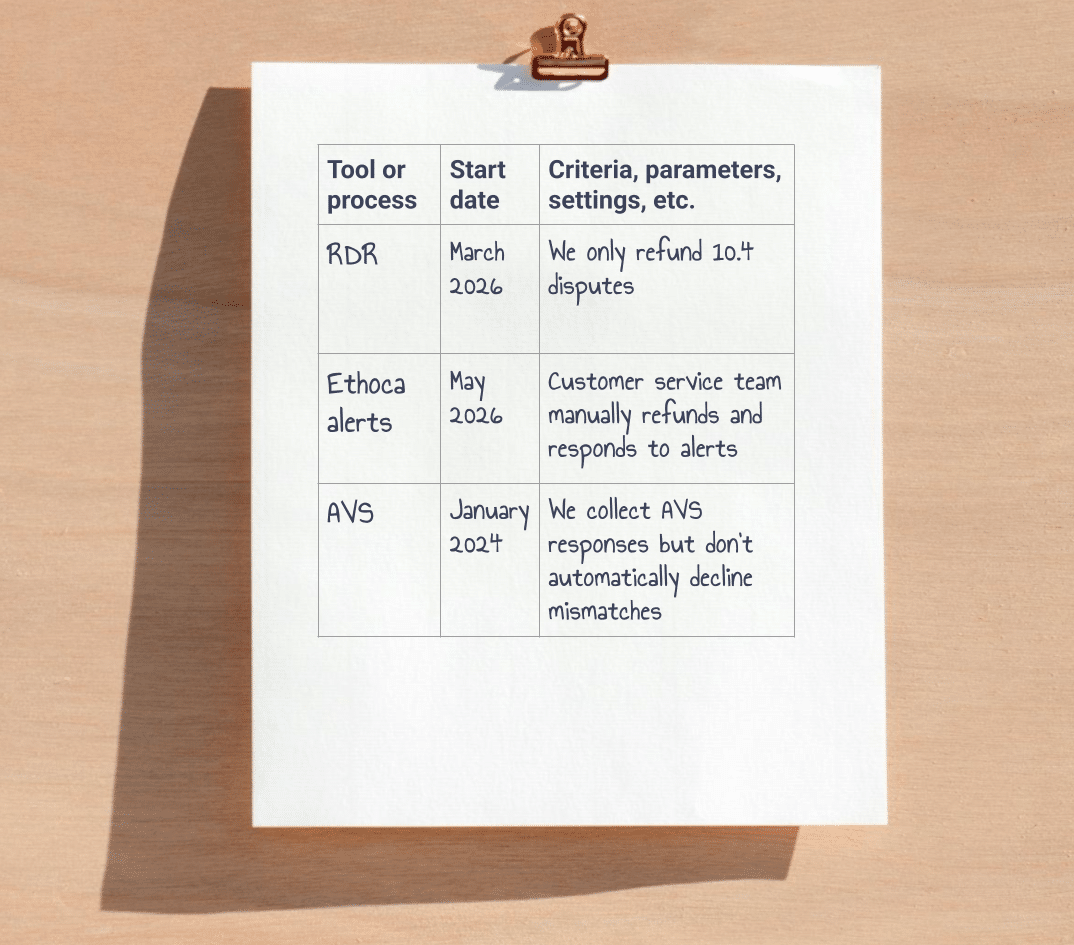
List the tools and processes you currently use.
Make a list of all the tools you currently use for fraud detection and chargeback prevention.
For example, your list might include solutions like:
- Address Verification Service (AVS)
- Card security code (CVV2, CVC, etc.)
- 3D Secure
- Pre-authorisation fraud detection tools
- Order Insight
- Prevention alerts (Ethoca alerts and/or Verifi CDRN)
- Rapid Dispute Resolution (RDR)
It might also include tactics like:
- Blacklists
- Velocity checks
- Manually reviewing suspicious orders
List the date you started using each tool and the criteria or parameters for their use.
Here’s an example.
SECTION #4
List the new tools and processes you will implement.
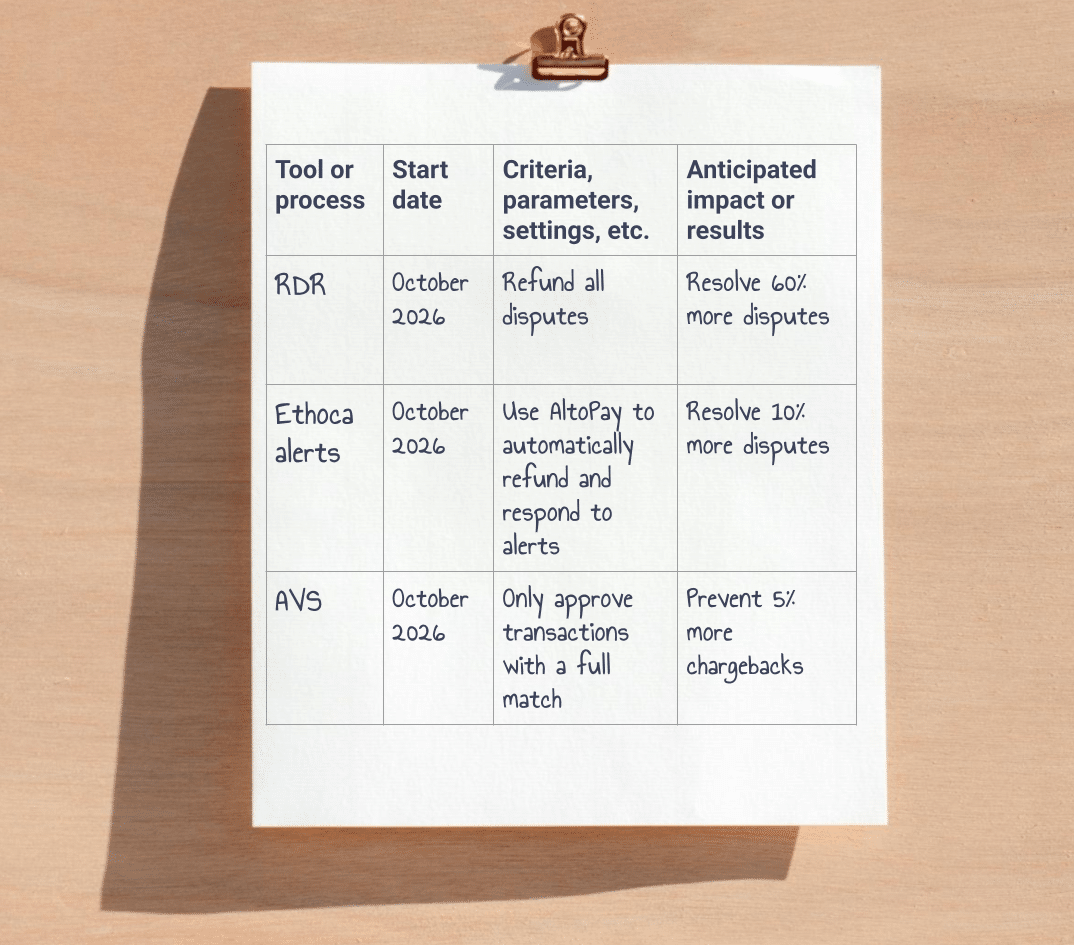
Make a list of any new or different tools you will use to help prevent chargebacks. Also, note any modifications you will make to your existing strategy. Modifications might include things like:
- Automating prevention alert management
- Hiring more customer service representatives for a better customer experience
- Changing your return policy
List the date you will make the changes, the criteria or parameters for each strategy, and the anticipated impact on your overall chargeback management results. Like this:
When you’ve decided which solutions you’d like to add or enhance, AltoShield can help you put your plan into action. Reach out today, and our team can help you achieve the best results possible.
SECTION #5
Outline your strategy for monitoring results and follow up.
Explain how you will monitor the success of your newly implemented chargeback reduction plan, including the date of your next scheduled review.
If your plan doesn’t seem to be effective, you may be asked to try new tactics. If you’ve been monitoring your outcomes, you’ll have a better idea of what is and isn’t working. You’ll know which tactics you should keep and which should be replaced with something new.
SECTION #6
Include supporting documentation.
When you submit your chargeback reduction plan, attach documents that support your strategy. These documents will help explain the reasoning for the decisions you made and establish trust in your plan.
Examples of documents you might want to provide include:
- Documents that prove you use the same DBA (doing business as) name for all customer interactions (website, order confirmation email, billing descriptor, etc.)
- A copy of your cancellation or return policy
- A copy of your terms and conditions
- Copies of emails you send to customers (order confirmation, upcoming billing notice for recurring transactions, refund confirmation, etc.)
- Documents that help explain the reason for excessive chargebacks (charts, graphs, team correspondences, etc.)
Want help creating your chargeback reduction plan?
The AltoShield team has decades of experience managing fraud and chargebacks. Plus, we have direct access to the teams at Visa and Mastercard and know what the card brands expect from merchants. We’d be happy to help you create a plan to reduce risk and ensure payment processing longevity.
Reach out today to get the conversation started. Don’t wait. If fraud and chargebacks are creeping up, you have no time to lose.
AUTHOR
Jessica Velasco
For more than a decade, Jessica Velasco has been a thought leader in the payments industry. She aims to provide readers with valuable, easy-to-understand resources.